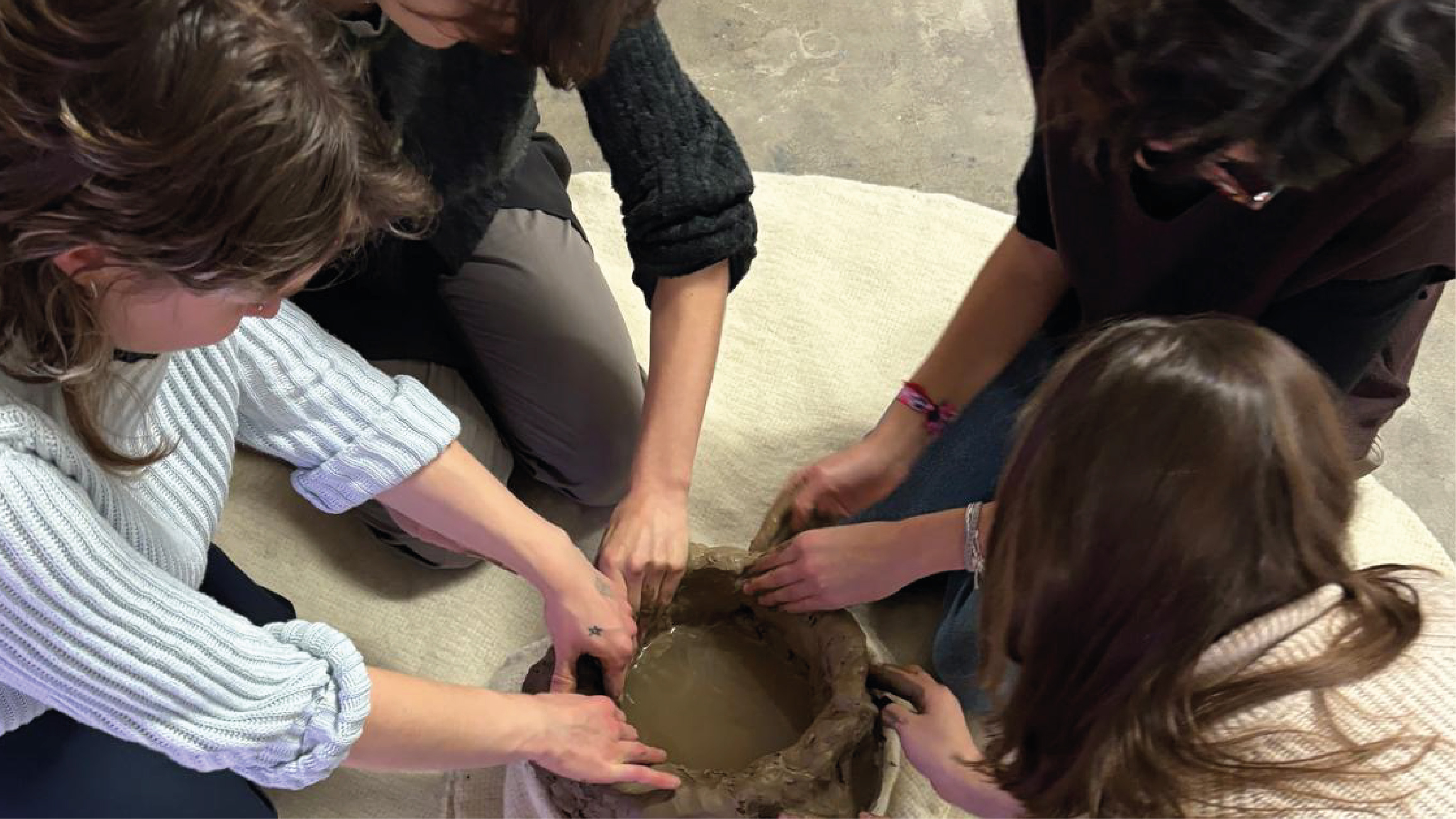
How to make a public resource your own?
2024
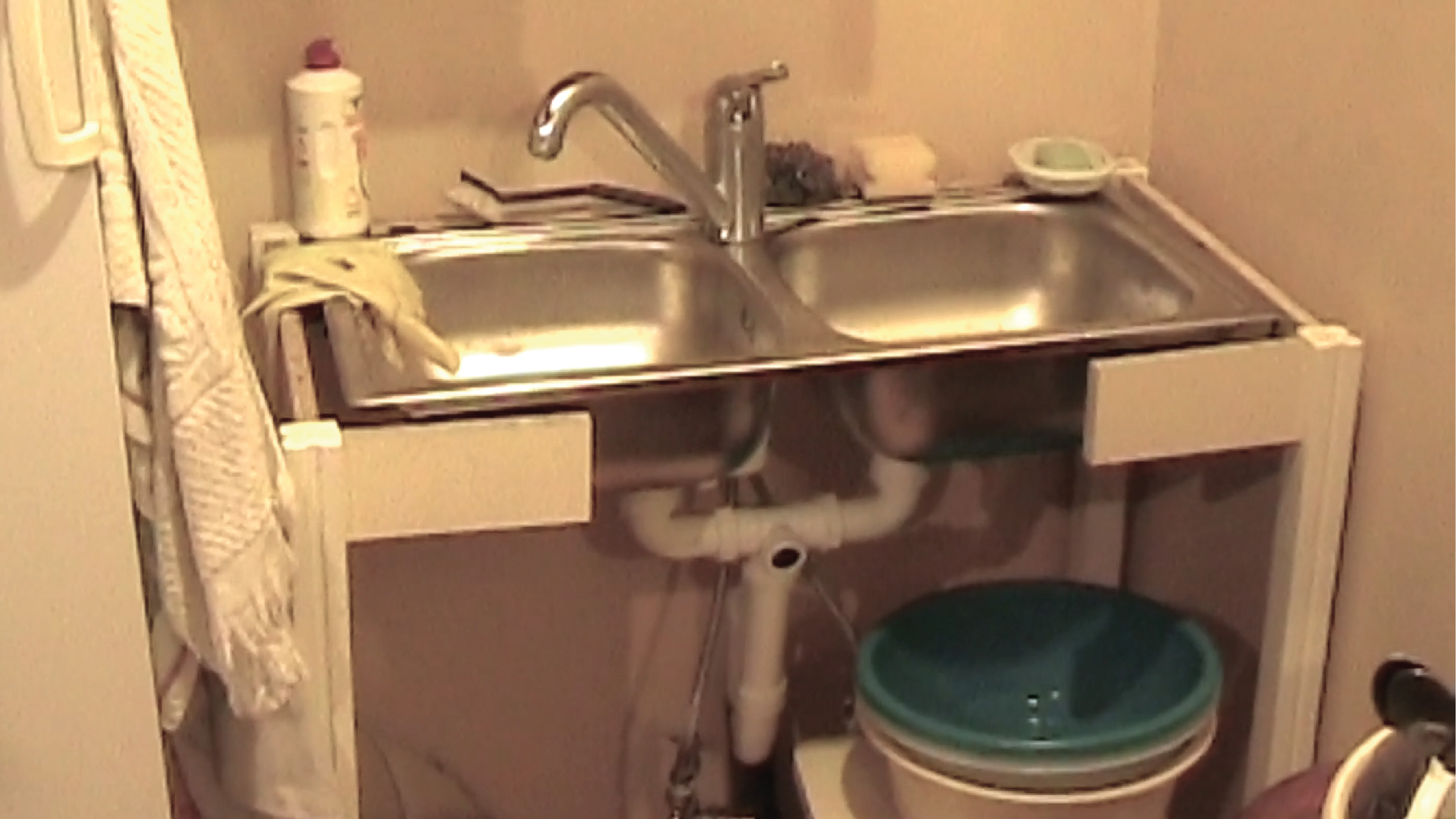
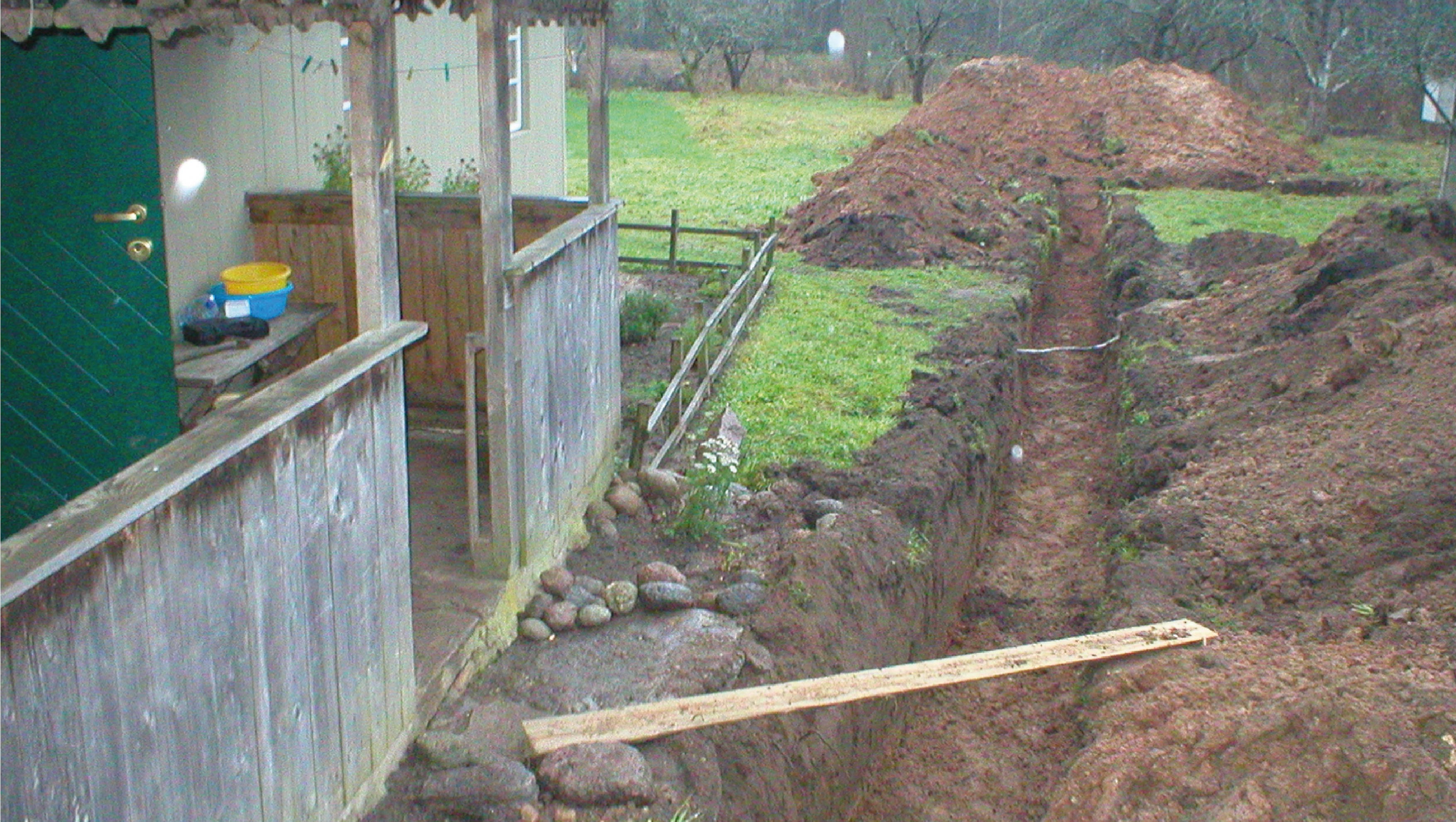
200 hundred years ago people in my village found a water spring, built a well around the spring and a village around a well. My village is called “a place near the well”. In late 1990s my parents moved in in one of the abandoned houses, and now my water comes from a 70 m deep borehole and a sink that they installed.
Why not use the well? A lot of things changed during the last 200 years, and modern lifestyle, privatization of the land, intensive agriculture made the well unsuitable for our family needs.
What things are lost in the well, and what could be rebuilt, remembered, reconnected? My research of historical and geological maps guided me to understand, that people situate themselves and build their lives around a water source. I learned that the act of privately or communally building an access to water, be it a well, or a sink, makes a water source private on communal or personal level.
But, now, that we have built our lives and our technology, we relieved our material needs, and we still miss something… Although we don't search for water anymore, we search for a connection.
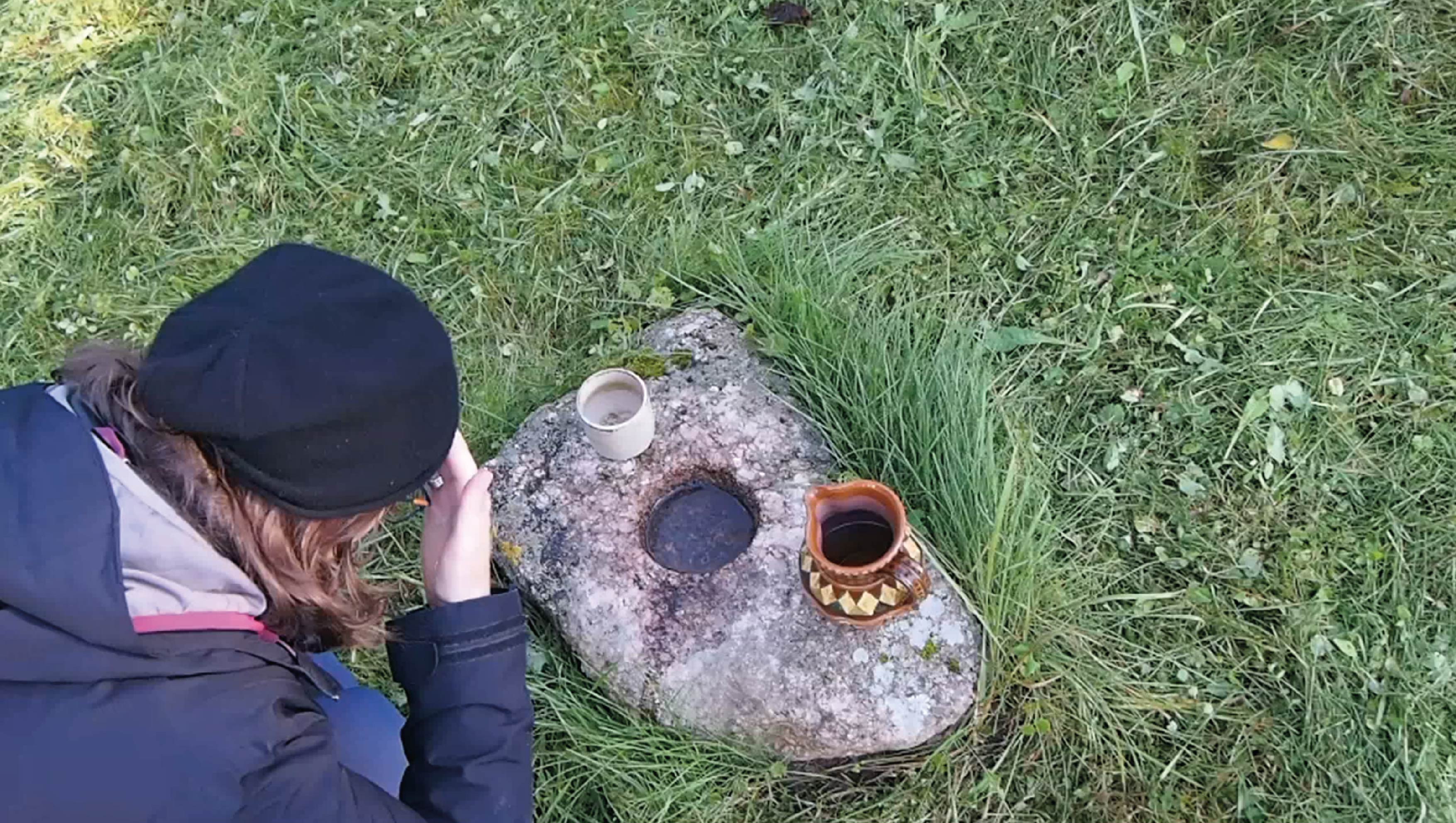
For a few years now, every morning my mum pours tap water into a stone vessel outside and meditates. It is the same water as we use for washing dishes, bathing, drinking, but every morning it becomes something more, loses its functional aspect and gains a ritualistic sacredness.
I am fascinated by this. It made me realize the importance of this other type of practice - immaterial, ritualistic practice - as a way to make water your own, but not by limiting access or building your own technology, but in a way of a very deep personal bond. It is not privatizing, it is your's as a dear friend is yours.
You hear a song that my mum sings to guide her through meditation. It is an archaic baltic song, and the words are addressing water as a being with a name and describing the qualities. Try to imagine, notice, and feel the greatness, wideness, deepness, coldness, the transparency, flow, speed, brightness, liveliness.
Ritual in itself is just an impractical thing to do, and not necessary for using water. But because of its impractical nature, it takes you out of the realm of the real and everyday, and puts you in a space of inner self. Through this experience, the play between earthly matters and spirituality is made whole and mindful, again.
Ritual is reenactment of a myth. But what myth do we live by?